

GPT-6.2 Astra and Sol: Price Cut, Real Gains, Real Catches (Free Prompt)
OpenAI shipped GPT-6.2 Astra and Sol on Nov 17. The headline is a cheaper Astra, but the benchmarks and early reports are mixed. Here is the short version, my take, and a free prompt to test it against Claude on your own work.
Quick take
- GPT-6.2 Astra (hard professional work) now costs $8 in / $40 out per million tokens, 20% less than GPT-6 Astra. Sol (everyday tasks) stays at $2 / $10.
- On the Artificial Analysis index Astra scores 62, second to Claude Fable 5.2 at 65.
- Catches: a 59% hallucination rate on very hard factual questions, and early reports of loops and pauses.
- Try it below: a free prompt that builds a fair 10-minute test of both models on your own tasks.
1. What OpenAI launched
Released Nov 17, 2026OpenAI released two new models, GPT-6.2 Astra and GPT-6.2 Sol.
- GPT-6.2 Astra: built for demanding professional work. API price is $8 per million input tokens and $40 per million output tokens, 20% cheaper than GPT-6 Astra.
- GPT-6.2 Sol: built for everyday tasks. API price is $2 input and $10 output, the same as GPT-6.1 Sol.
- Where to get them: ChatGPT Work and Codex for Plus, Pro, Enterprise and Edu users, plus the OpenAI API. Both take text and images and have a context window of about 1.05 million tokens.
- Benchmarks: Artificial Analysis puts Astra at 62 on its Intelligence Index, behind Claude Fable 5.2 (65) and ahead of Gemini 4 Carbon (60) and Claude Opus 5.5 (59). Sol scores 57. OpenAI says Sol matches the old GPT-6 Astra level at about 15% of the cost per task.
Many of the cost-versus-Claude numbers in the launch coverage come from OpenAI’s own comparisons, so treat them as the vendor’s view.
2. Why it matters
For creators and small teams- Cheaper top-end model: a 20% price cut on Astra and a strong low-cost Sol put real pressure on AI prices.
- The gap to Claude is small: 62 versus 65 on one index, and Epoch AI found Astra behind Fable 5.2 on real-world research tasks.
- Not a clean sweep: Astra ranks 7th on the Vals Index, and on Artificial Analysis’s very hard factual test it hallucinated 59% of the time (Sol 55%). That test is unusually hard, so it is not your everyday rate.
- Early reliability reports: WCCFTech reports pauses, loops and unparsable outputs within hours of launch. Treat that as early and unconfirmed.
- Safety flag: Bloomberg reports OpenAI scrapped an earlier Astra version for two months over cybersecurity concerns.
3. My take: who it helps, the catch, the verdict
My opinion- Who it helps: people who pay per token, such as developers and heavy API users. A cheaper Astra and a capable Sol can cut a real bill.
- The catch: benchmark rank is not your workflow. A model that wins a benchmark can still stall on your actual tasks, and the hallucination number is a reason to keep checking facts.
- Verdict: worth a test, not a switch. I would not move a working setup because of one launch week. Run the same three real tasks on both models and let the results decide.
4. Free prompt: a fair 10-minute test, Claude vs GPT-6.2
Unlocks in a few seconds- Wait for the timer, then click Show the prompt.
- Click Copy prompt and open a new chat in Claude.
- Replace the parts in [square brackets] with your work and three real tasks.
- Send it, then paste each generated test prompt into both models and fill in the scoresheet.
I want a fair 10-minute test to compare two AI models on MY real work: Claude Fable 5.2 and OpenAI's GPT-6.2 (Astra and Sol).
My work: [one line, e.g. "I run a YouTube channel about video editing"]
Here are 3 real tasks I do every week:
1. [task 1, paste a real example]
2. [task 2, paste a real example]
3. [task 3, paste a real example]
Please:
1. Turn each task into a test prompt I can paste into both models, unchanged.
2. Give me a simple scoring rubric (1-5) with 4 criteria: correct facts, follows my instructions, usable without edits, and how long it took.
3. Give me a scoresheet table I can fill in for each model.
4. Tell me which of my tasks likely need the expensive model and which a cheaper one (like Sol, or a smaller Claude model) can handle.
5. Remind me to check any facts or numbers the models give me, because every model can make things up.
Keep it under one page and use plain words.
8
Your prompt is getting readyIt unlocks in a few seconds.What you get: a scoresheet (sample rows)
Sample numbers only, to show the layout. Your scores come from your own tasks.
| Task | Model | Facts right (1-5) | Usable as is (1-5) |
|---|---|---|---|
| Write a video script outline | Claude | 4 | 5 |
| Write a video script outline | GPT-6.2 Sol | 4 | 4 |
| Summarize a 20-page report | Claude | 5 | 4 |
| Summarize a 20-page report | GPT-6.2 Astra | 4 | 4 |
Use the exact same wording in both models, and run each test once before you decide.
5. What to watch next
Coming up- Independent testing: more third-party results should show whether the early loop and pause reports hold up.
- Claude’s reply: watch for Anthropic pricing or model changes in response.
- Your own results: the test above is the only benchmark that counts for your work.
FAQ
How much does GPT-6.2 Astra cost?
In the API, Astra is $8 per million input tokens and $40 per million output tokens, 20% cheaper than GPT-6 Astra. Sol is $2 and $10.
Is GPT-6.2 better than Claude Fable 5.2?
Not on the Artificial Analysis index: Astra scores 62 and Claude Fable 5.2 scores 65. Results vary by task, so test both on your own work.
What is the difference between Astra and Sol?
Astra is aimed at demanding professional work and costs more. Sol is for everyday tasks and costs about a quarter as much per token.
Where can I use GPT-6.2?
In ChatGPT Work and Codex for Plus, Pro, Enterprise and Edu users, and through the OpenAI API.
Sources: The Decoder: OpenAI launches GPT-6.2 Astra and Sol with lower API prices · AI News Weekly: OpenAI ships GPT-6.2 Astra at $8/$40 · Bloomberg: OpenAI unveils new Astra AI model after scrapping prior release
Want to put Claude to work on your videos?
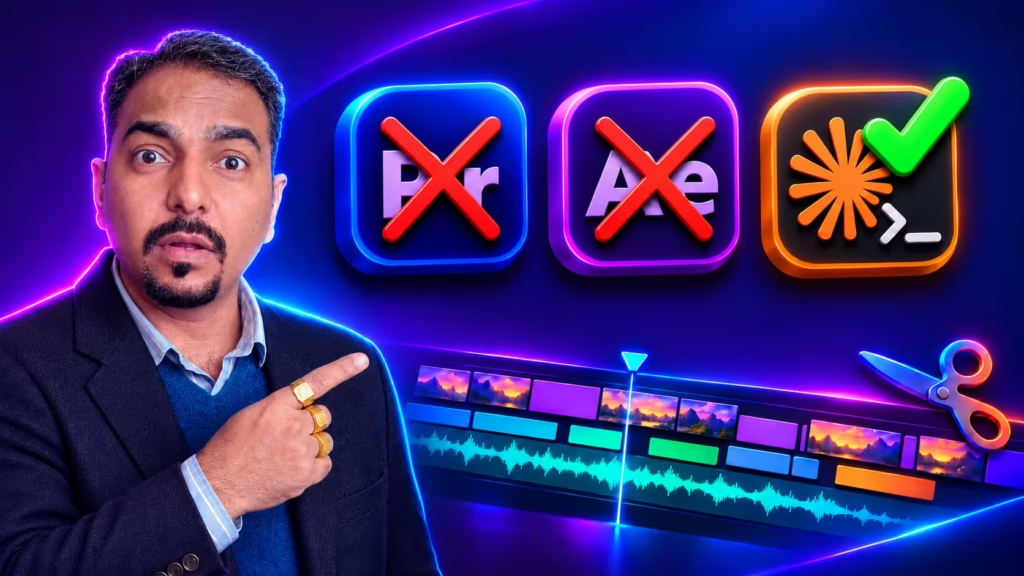
Whichever model wins your test, Claude can edit video for you. In my course Learn Video Editing with Claude Code you edit with Claude, with no Premiere and no code.


